
The above video is inspired by this article.
In This Article
- Why anxiety and worry are rising in modern life
- The difference between fear in the body and fear in the mind
- Common types of anxiety disorders and how they manifest
- A natural, emotion-based method to calm your nervous system
- Practical tools to shift out of fear and back into presence
Working With Fear: A Natural Approach to Anxiety and Worry in an Unnatural World
 by Jude Bijou, M.A., M.F.T., author of the book: Attitude ReconstructionLet’s face it—our world feels more uncertain than ever. Political instability, climate change, economic pressure, and nonstop digital noise have made anxiety and worry feel like permanent houseguests in many of our lives. If you’re feeling unsettled these days, you’re not alone. And while there's no magic bullet, there is a natural way forward—one rooted in understanding your emotions, not suppressing them.
Anxiety and Worry: The Two Faces of Fear
According to “the Google,” anxiety stems from difficult experiences growing up. While that’s often true, I believe some of us are simply born with a tendency to experience fear more intensely—just like others might be more prone to anger or sadness. It’s part of our emotional DNA. But regardless of its origin, fear often shows up in two distinct ways: anxiety in the body and worry in the mind.
Anxiety is the feeling—that racing heart, tight chest, or sense of unease you can’t quite name. Worry is what the mind does with that feeling. It spins stories. It catastrophizes. It rehearses worst-case scenarios in high-definition. You can think of anxiety and worry as a dysfunctional duo that feed off each other, keeping you locked in fear even when danger isn’t present.
The Culture of Constant Fear
If you’ve watched TV lately, you’ve probably seen back-to-back ads for prescription drugs. Whether it's for ADHD, acid reflux, or insomnia, we’re offered instant relief in a bottle. So it’s no surprise that anxiety and worry come up regularly in my therapy practice.
And here’s the thing: it’s not just individual problems fueling the fire. We’re living in a world where fear is baked into the system—news cycles that never rest, leaders making decisions that feel disconnected from public wellbeing, and social media that amplifies outrage. If you’re already wired for fear, these external stressors can push you past your tipping point.
What Exactly Is an Anxiety Disorder?
According to the National Institute of Mental Health, about 40 million U.S. adults—that’s 18% of the population—experience an anxiety disorder in any given year. An anxiety disorder is more than occasional nervousness. It lasts at least six months and can worsen without treatment. It often overlaps with depression, substance use, or other health challenges. Women are nearly twice as likely to suffer from anxiety as men.

Here are some common forms:
- Panic disorder: Sudden attacks of terror and physical symptoms like heart palpitations.
- Obsessive-compulsive disorder (OCD): Repetitive rituals to cope with distressing thoughts (like germs or safety).
- Post-traumatic stress disorder (PTSD): Lingering fear after a terrifying event.
- Social anxiety disorder: Fear of being judged or embarrassed in social settings.
- Specific phobias: Intense fear of objects or situations like flying, spiders, or heights.
- Generalized anxiety disorder: Chronic worry about a wide range of everyday things—money, health, family, work.
We’ve Normalized Worry… But That Doesn’t Make It Healthy
In our society, worry is seen almost as a virtue. Moms worry about their kids. Teenagers worry about grades. Workers worry about job security. It’s accepted—even admired. But chronic worry isn’t the same as caring. It’s unexpressed fear looping in the mind, often disguised as responsibility or vigilance.
Worry doesn’t fix the future. It doesn’t make us better parents or employees. All it does is drain our energy and create self-imposed misery. Most of what we worry about never happens. And even when it does, we usually handle it far better than our minds imagined.
The antidote to worry isn’t certainty—it’s presence. Peace is fear’s opposite, and peace lives only in the now.
What You Can Do Instead: Shake, Quiver, and Return to Now
Here’s the good news: fear doesn’t have to control you. It’s a natural emotion—one of six core feelings we all have. And like all emotions, it’s meant to move through the body, not get stuck there.
When fear arises, your body knows what to do. Watch a dog at the vet—he’ll tremble, shake, and quiver. That’s the body’s way of discharging excess energy. We can do the same.
Next time you feel anxious, try this: shake. Wiggle. Shiver. Let your arms, legs, shoulders, jaw—even your spine—vibrate and release. Do it to music if it helps. It may feel silly at first, but it works. You're not suppressing fear—you’re moving it.
While you do this, don’t fuel your fear with scary thoughts. Just gently say to yourself: “It’s okay to feel scared. It’s just fear moving through.”
Mantras That Calm the Storm
After shaking, replace fear-based thoughts with truth-based ones. Here are a few gentle reminders you can say out loud or repeat silently:
- Everything is all right.
- Everything will be all right.
- One thing at a time.
- I’ll handle the future in the future.
- I’ll do what I can, and the rest is out of my hands.
- Worry doesn’t work. It doesn’t make me happy.
- Be here now.
Practical Tools for Everyday Peace
If you must worry, set a timer. Give yourself five minutes a day to worry—then stop. The rest of the day, gently return to the present. Redirect your thoughts. Shake off the tension. Repeat your truths.
Create a task list. Break overwhelming to-dos into small, achievable steps. Focus on the next right thing—not everything at once. Anxiety often stems from trying to mentally juggle the whole picture. Small steps shrink fear.
Ask yourself: What can I do right now? Not tomorrow. Not next week. Now. Stay with that. Even the smallest progress helps return you to a state of agency and calm.
The Triple Benefit of Returning to Presence
When you commit to the present moment—physically, mentally, and emotionally—you unlock three life-changing benefits:
First, you handle life’s demands with more clarity and confidence.
Second, you reduce the grip of anxiety and worry.
Third, you naturally become more peaceful, resilient, and confident — no pill required.
You Always Have a Choice
I hope this article offered you some strategies—or at the very least reminded you of something essential: you always have a choice. You can let fear run the show, or you can return to presence, move the energy, and re-center. You won’t always get it perfect, but you don’t need to. You just need to keep coming back to now.
Your peace lives here. In this breath. In this moment.
Right now is enough.
©2025 by Jude Bijou, M.A., M.F.T.
All Rights Reserved.
Book by this Author: Attitude Reconstruction
Attitude Reconstruction: A Blueprint for Building a Better Life
by Jude Bijou, M.A., M.F.T.
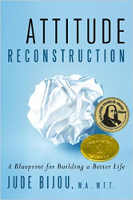 With practical tools and real-life examples, this book can help you stop settling for sadness, anger, and fear, and infuse your life with joy, love, and peace.
Jude Bijou's comprehensive blueprint will teach you to: cope with family members' unsolicited advice, cure indecision with your intuition, deal with fear by expressing it physically, create closeness by truly talking and listening, improve your social life, increase staff morale in just five minutes a day, handle sarcasm by visualizing it flying by, carve out more time for yourself by clarifying your priorities, ask for a raise and get it, stop fighting via two easy steps, cure kids' tantrums constructively. You can integrate Attitude Reconstruction into your daily routine, regardless of your spiritual path, cultural background, age, or education.
For more info and/or to order this book, click here. Also available as a Kindle edition.
About the Author
Jude Bijou is a licensed marriage and family therapist (MFT), an educator in Santa Barbara, California and the author of Attitude Reconstruction: A Blueprint for Building a Better Life.
In 1982, Jude launched a private psychotherapy practice and started working with individuals, couples, and groups. She also began teaching communication courses through Santa Barbara City College Adult Education.
Visit her website at AttitudeReconstruction.com/
Article Recap:
In this article, we explore how anxiety and worry are two faces of fear—one in the body, the other in the mind. With emotional presence and somatic techniques, we can calm the storm naturally. From mindful shaking to truth-based mantras, these anxiety relief tools offer lasting peace without suppressing our feelings.
#anxietyrelief #emotionalpresence #mentalhealth #stressmanagement #healinganxiety #naturalremedies #innerpeace #overcomingfear #worryless #calmyourmind